
Quick answer: Choose food packaging by temperature, moisture, grease, sealing, presentation, and the documented suitability of the exact item. Plastic, paper, aluminum, and fiber each fit different food-service uses.
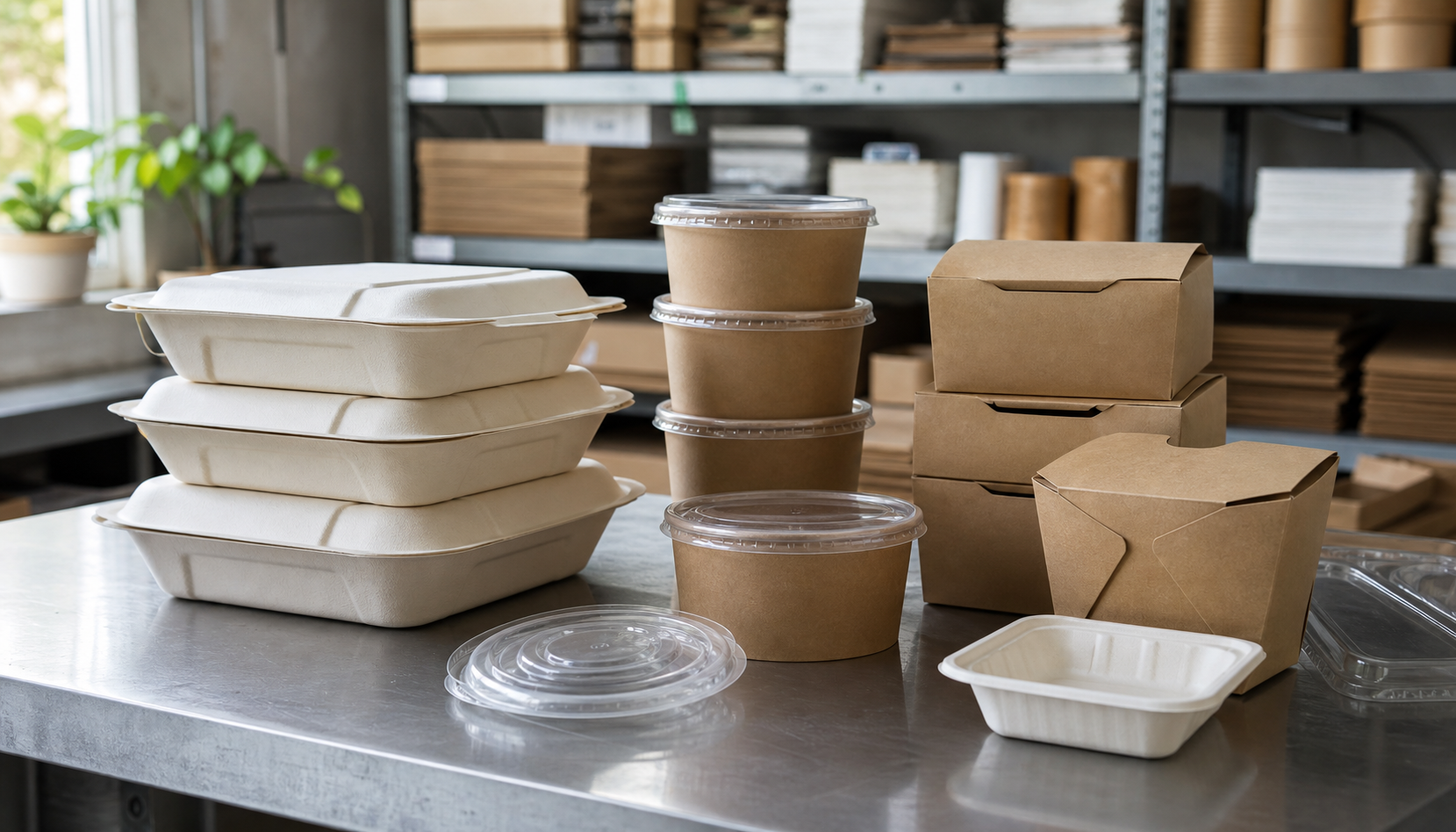
Choosing plastic food packaging starts with the food and the way the container will be used. A material name alone does not establish that a finished container is suitable for your menu. Match the exact item, lid and supporting documentation to the intended service.
This chapter explains how to evaluate those choices. It does not establish food-contact suitability, temperature limits or performance for any specific Armala product.
What is plastic food packaging made from?
A plastic package is a finished material system, not just a resin name. Its assessment can involve the polymer and other components, such as colorants or adhesives. FDA explains that food-contact substances include packaging components and substances applied to surfaces. Read FDA’s component explanation.
For purchasing, ask for the exact material specification for the body and lid separately. Record the item code and the document revision so a later substitution does not quietly become a different packaging decision.
How are plastic containers manufactured?
Thermoforming is one production route for plastic packaging. ILLIG describes sheet-processing and roll-fed systems that use vacuum, pressure or both, with forming and punching either together or in separate stations. Its systems can include preheating and stacking equipment. See the equipment manufacturer’s process overview.
This explains a general manufacturing route; it does not identify how an Armala item was made. Ask the supplier to confirm the exact construction if the process matters to your specification.
Why might a buyer choose plastic, and what are the tradeoffs?
Choose it when the documented finished package meets the job. Buyers may prioritize seeing the food, portion presentation, closure style or a particular container format. Treat these as selection criteria to verify on an actual sample, rather than benefits guaranteed by the word “plastic.”
The practical drawback is that a familiar-looking container can still be the wrong specification. A change in food, holding time, heating instructions or lid may require a new evaluation. FDA distinguishes room-temperature, refrigerated, frozen, hot-fill and reheating conditions; one use should not be treated as evidence for another. Check the FDA use categories.
How should plastic be compared with paper, fiber or aluminum?
Compare finished packages against the same written brief. Do not rank whole material families as universally better or safer.
- For a plastic option, request the body and lid specification and documented intended use.
- For paper or fiber, ask about the complete construction, including any coating, lining or adhesive relevant to food contact.
- For aluminum, ask about the complete tray-and-lid system and its use instructions.
- For every option, compare dimensions, closure handling, presentation and the instructions your staff and customers will need.
FDA’s component framework considers the substances that make up the article. Changing the visible material does not replace that review. Keep disposal questions separate from food-contact questions, and obtain evidence before making either claim. For broader operational selection, use our restaurant container guide.
What does food-contact documentation need to establish?
It needs to connect the exact material to its intended use. FDA identifies several possible regulatory bases and explains that an effective food-contact notification is specific to the identified manufacturer, substance and use conditions. A notification number for a similar substance is not automatically transferable. FDA also notes that a buyer may request a manufacturer’s letter of guaranty for the intended food-contact use. Read FDA’s regulatory-status guidance.
Ask the supplier to explain which basis applies to the proposed item. Keep the supporting document with your item record and resolve discrepancies before approving the purchase.
Does recycled plastic need a separate question?
Yes. Ask for evidence covering the recycled material and intended application. FDA’s recycled-plastics guidance discusses possible residual contaminants and their migration into food when evaluating recycling processes. A recycled-content statement alone does not answer the food-contact question. Read FDA’s chemistry guidance.
What should buyers verify before requesting pricing?
Prepare one brief that lets each proposed option be evaluated against the same job.
- Food description, including whether it is oily, acidic, liquid or dry.
- Actual filling, storage and serving conditions, with times and temperatures where known.
- Any intended reheating, freezing or repeat use.
- Required dimensions, portion size, lid style and handling needs.
- Exact item identifiers and documentation for the complete package.
- Quantity and delivery destination for the pricing request.
- A sample-evaluation plan using your own food and service routine.
Check sample handling and presentation separately from documentary suitability. A lid that appears to fit or a container that survives one trial is not a substitute for the supplier’s intended-use evidence.
Frequently asked questions
Does a resin name prove that a container suits my food?
No. Ask for documentation linking the exact finished item to your intended food and use conditions.
Can cold-storage documentation establish reheating suitability?
No. FDA treats storage and reheating as distinct use conditions. Obtain confirmation for the actual reheating use.
Does choosing paper remove the need for food-contact checks?
No. Evaluate the complete package and its relevant components, including any lining or coating.
Is recycled content enough to establish food-contact suitability?
No. Request evidence covering the recycled material and intended application.
Can a handling trial replace supplier documentation?
No. Use the trial to assess handling and presentation, alongside the intended-use documentation.
What should I send Armala next?
Start with the food containers page, then request a quote with your menu use, preferred format, quantity and the specifications still needing confirmation. Ask for suitability and item details to be confirmed before committing to a packaging choice.
Return to the Packaging Learning Center for related material and buying guides.